
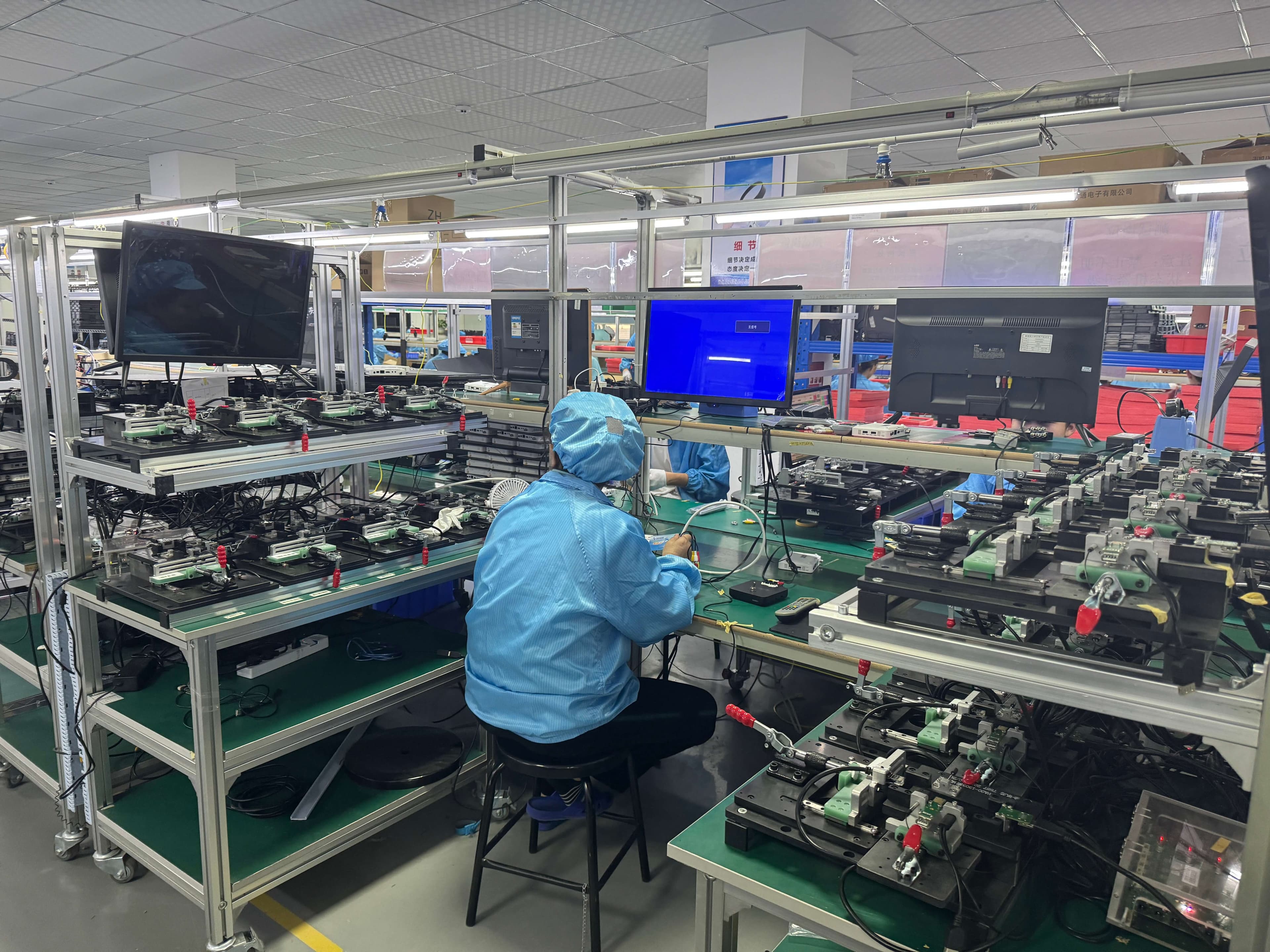
There is no universal answer to who owns, stores, maintains, verifies, calibrates, repairs, or transfers a PCB Assembly (PCBA) test fixture. Those responsibilities should be defined in the RFQ, contract, test plan, or controlled project record before the fixture is relied on across builds.
At Venture Electronics, we treat this as a governance question rather than a one-time non-recurring engineering line item. Paying for fixture development does not, by itself, define legal title, custody, software rights, calibration responsibility, storage conditions, or the conditions for transfer. The checklist below is a buyer framework, not a statement of default terms for every Venture Electronics order.
Define the complete test asset—not only the physical fixture
A fixture can look intact while the usable test baseline has already changed. The controlled asset may include the mechanical frame, probes, cables, connectors, interface boards, power supplies, instruments, drawings, wiring diagrams, test software, firmware, configuration files, access credentials, golden unit, test procedure, acceptance limits, and result format.
The baseline should identify a fixture ID and the applicable board part number and revision. It should also connect the fixture to the test-plan revision, software or firmware version, interface definition, initial validation result, and any known limitations. When Venture Electronics discusses PCB Assembly test-fixture coordination, these relationships help determine whether the available inputs are sufficient for the intended build; they do not imply that every project uses a single company-wide numbering system.
Separate maintenance, verification, and calibration
These terms answer different questions. Maintenance restores or preserves physical function—for example, replacing worn probes, repairing cables, cleaning contacts, checking clamps, or correcting mechanical damage. Verification asks whether the fixture still produces an acceptable result against a defined reference. Calibration applies when a measuring device or channel must be related to a recognized reference under a specified method.
Not every fixture component is meaningfully “calibrated.” Some items are inspected, some are functionally verified, and some instruments may require calibration. The project should identify which category applies, which acceptance limits are used, who performs the work, what evidence is retained, and what happens when the result is outside tolerance.
Use both calendar-based and event-based triggers
A fixed annual interval is not automatically suitable for every fixture. The review frequency can depend on fixture design, probe life, usage volume, product risk, storage conditions, instrument requirements, and the stability of previous results. Event-based triggers can be equally important.
- A board, connector, firmware, or test-plan revision changes.
- The fixture is moved, dropped, repaired, or stored for an extended period.
- Probe marks, intermittent contacts, cable damage, or abnormal force are observed.
- A golden unit produces an unexpected result or yield behavior changes.
- A referenced instrument reaches its calibration due date or is replaced.
- The fixture is transferred to another site, supplier, or test station.
Venture Electronics can review fixture and test inputs according to project requirements, but the appropriate interval and method depend on the fixture, product, acceptance risk, and agreed responsibility. No universal calibration interval or internal calibration-laboratory scope should be assumed for every project.
Control software, firmware, access, and backups
A physical fixture without its executable baseline may be unusable. The project record should identify the approved test-software build, required drivers, firmware or configuration package, operating environment, licenses, access owner, backup location, checksum or release identifier where appropriate, and the person authorized to approve changes.
Keep production files separate from development copies. If an updated program changes test coverage or acceptance behavior, the change should be reviewed and released with the affected product revision. A backup is not complete if nobody can restore it, required licenses are missing, or the receiving party cannot verify that the program matches the approved test plan.
Write ownership and custody as separate decisions
Legal ownership and day-to-day custody are not the same. A buyer may own a fixture while the manufacturing partner stores and uses it, or the parties may agree to another arrangement. The written record should answer:
- Who holds legal title to the fixture and associated design files?
- Where will the asset be stored, and under what identification and protection conditions?
- Who authorizes routine maintenance, repairs, spare parts, and design changes?
- Who pays for storage, verification, calibration, repair, duplication, or obsolescence work?
- What inactivity period, if any, triggers a storage review or retirement decision?
- Who may request transfer, and what notice, payment, confidentiality, or export conditions apply?
These are example contract questions, not Venture Electronics contract policy. Commercial terms, intellectual-property rights, and transfer obligations require written agreement between the parties.
Make the transfer pack usable by the receiving party
Moving the fixture is only one part of transfer. A practical transfer pack can include the asset list, photographs, drawings, wiring and interface information, applicable product revisions, test plan, software and firmware, license or access information, golden unit or reference method, maintenance and repair log, verification or calibration records, spare parts, known issues, packing instructions, and approved change history.
The receiving party should perform an incoming inspection and revalidation in its own environment. Powering on successfully does not prove that the fixture still applies to the product revision, executes the correct program, or produces equivalent results after transport. Venture Electronics can coordinate project records and discuss a transfer or revalidation scope when the necessary files, rights, references, and acceptance criteria are available.
A responsibility matrix to approve before reuse
Before a test fixture is reused, four decisions should be written clearly so ownership, execution, and approval are not confused.
Test intent and limits. The buyer or product owner defines the product requirements and retains acceptance authority. The manufacturing partner reviews whether the plan is executable with the available resources. The joint approval point is a released test plan and an agreed result format.
Fixture care. The buyer or product owner approves the commercial and ownership terms. The manufacturing partner performs the agreed storage, inspection, or maintenance activities. Both parties should approve the trigger, interval, required evidence, and cost before reuse.
Program changes. The buyer or product owner approves changes that affect function or acceptance. The manufacturing partner controls the agreed production version. Reuse should proceed only after the version release and required revalidation evidence are approved.
Transfer or retirement. The buyer or product owner confirms the destination and transfer authority. The manufacturing partner prepares the agreed asset and records. The handover closes with a condition report and the receiving party’s acceptance.
The matrix should be adapted to the real contract. Its purpose is to expose unanswered ownership and control questions before a repeat build depends on the fixture.
Frequently asked questions
Does paying NRE mean the buyer automatically owns the fixture?
Not necessarily. Payment description alone may not define title, design-file rights, custody, transfer, or future repair costs. The commercial agreement should state them explicitly.
Does every PCBA fixture need formal calibration?
No. Some elements may require maintenance or functional verification, while measuring instruments or channels may require calibration. The test plan should define the correct control and evidence for each item.
Can an old fixture be reused after a board revision?
Only after confirming mechanical, electrical, software, firmware, test-limit, and acceptance compatibility. The scope of revalidation depends on what changed.
Treat fixture reuse as a controlled release
A test fixture becomes reusable when its product applicability, physical condition, program baseline, reference method, responsibilities, and records are all controlled. A stored fixture without that context is only hardware with an uncertain claim.
Venture Electronics supports international hardware teams with PCB Assembly and project-specific testing discussions. Share the board revisions, test plan, existing fixture information, program baseline, acceptance criteria, and expected reuse period. Venture Electronics can identify missing inputs and help define a review, maintenance, reuse, or transfer scope for customer confirmation.