
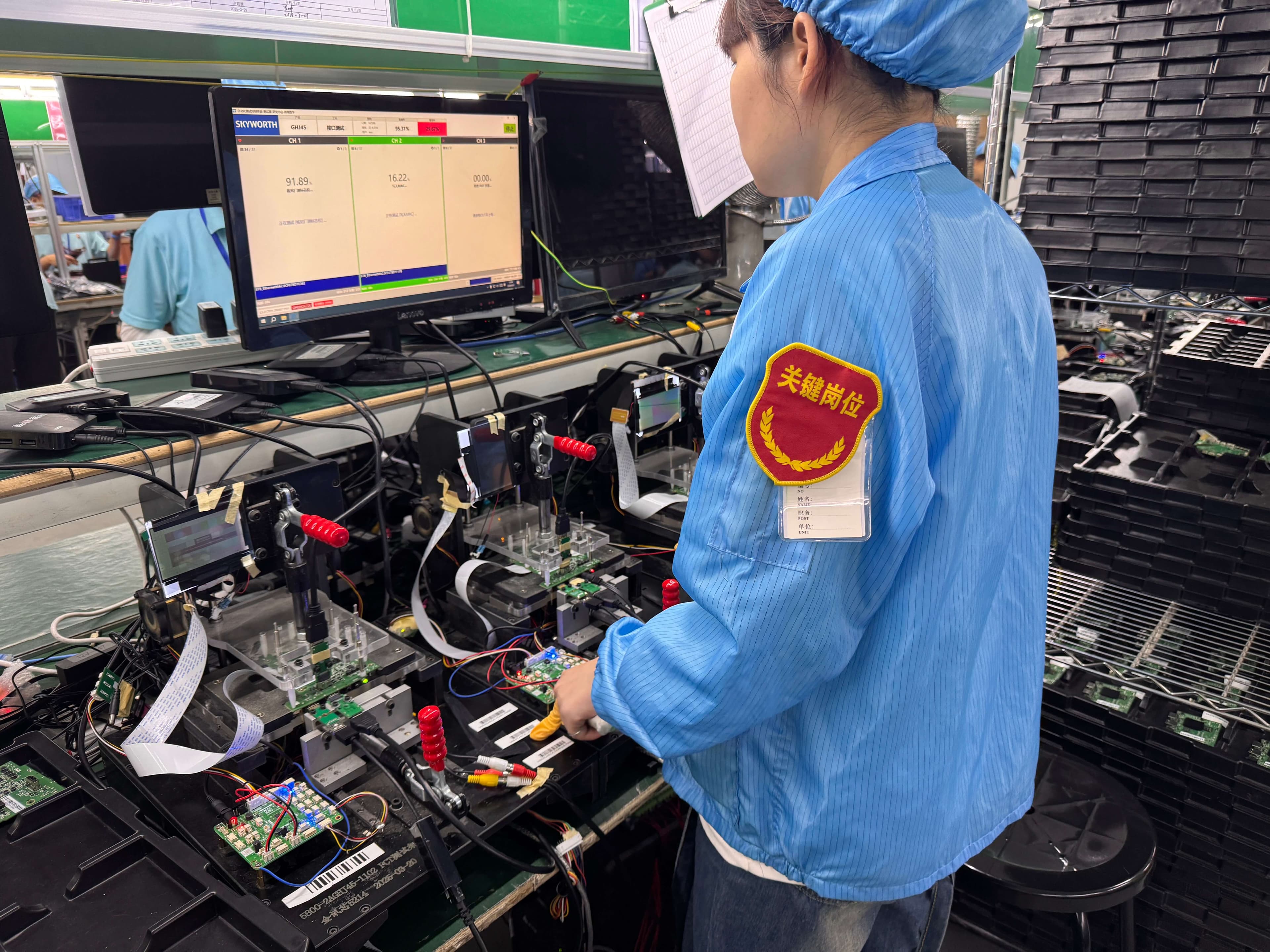
When one PCB Assembly (PCBA) design ships as three firmware-defined SKUs, the safest control is a single identity chain from the customer-approved release package to the final carton. Programming success alone does not prove that the board received the correct SKU configuration, passed the correct test, carried the correct label, or entered the correct shipment.
At Venture Electronics, our PCB Assembly view is that hardware revision, firmware, test configuration, serial or batch identity, product label, and pack-out rule must be controlled as one relationship. The eight controls below are a recommended buyer framework, not a claim that every Venture Electronics order follows one fixed SOP or uses a particular MES, ERP, barcode, or automated mistake-proofing platform.
Control 1: create one approved SKU master matrix
The master matrix should be the first place a team looks when it asks, “What makes SKU A different from SKU B?” Useful fields include customer SKU, PCB or PCBA revision, BOM revision, firmware part number and version, configuration options, test-program revision, acceptance criteria, product label, packaging rule, and destination or language variant where applicable.
The matrix should identify the product owner and approval status. It should not be reconstructed from email fragments, filenames, or operator memory. Venture Electronics can use the customer-approved relationship to evaluate assembly, programming, testing, labeling, and delivery scope; the customer remains responsible for defining and approving the product variants.
Control 2: release the complete build package together
A controlled release should connect Gerber or ODB++, BOM, CPL or pick-and-place data, assembly drawings, firmware, programming instructions, test plan, label artwork, packaging specification, and revision history. If one file changes, the team should assess which other files and approvals are affected.
A firmware update can change a product label or test response even when the hardware remains unchanged. A BOM change can affect the firmware configuration or test limits. Release status should therefore be explicit: approved, superseded, on hold, or development-only. Suppliers should not be expected to infer the valid combination from filenames marked “final.”
Control 3: route every work order or Job ID to one SKU
Each production batch should have a work order or Job ID that carries the intended SKU and points to the approved release package. The identifier should follow the batch through material issue, assembly, programming, test, rework, labeling, pack-out, and shipment documentation.
This is a control principle, not a software claim. A team may implement it through controlled travelers, digital records, barcodes, or another approved method. Venture Electronics can discuss an executable PCB Assembly routing and record scope according to project requirements, but this article does not imply that a specific automated system is available or included by default.
Control 4: control programming files, permissions, and line-side versions
The approved programming source should have an identifiable owner, part number or release name, version, status, and integrity check appropriate to the project. The work instruction should define the target device, programming interface, configuration steps, pass/fail response, retry or failure handling, and the evidence retained.
Only the required production version should be available at the line or station. Development builds, obsolete releases, and unapproved regional variants should be separated from production use. Access to release, replace, or select a programming file should be assigned, and a change that affects product function or identity should require customer approval.
Control 5: perform line clearance and segregate WIP and rework
A SKU changeover creates risk even when the hardware looks identical. Before starting the next SKU, teams should clear or account for previous labels, travelers, programmed boards, test settings, packaging materials, and work-in-process. Physical separation, status identification, and a documented changeover check can reduce cross-SKU mixing.
Rework needs the same discipline. A board that returns from programming, test, or repair should retain its intended SKU identity and return to the correct firmware and test baseline. These are recommended controls; they should not be converted into a claim that any supplier can eliminate every mix-up or applies an identical line-clearance procedure to every project.
Control 6: bind product identity to the programming result
Where project requirements call for traceability, the record can link a serial number or batch identifier to the customer SKU, hardware revision, firmware version, programming result, date or station record, and subsequent test status. The field set and granularity should match the product risk and buyer acceptance requirements.
Venture Electronics can discuss project-specific PCB Assembly quality and programming records, but single-board serial traceability and an unlimited retention period are not automatic for every order. The customer should define required fields, label format, report format, retention expectation, and how to handle a board whose programming record is missing or ambiguous.
Control 7: link the test configuration to SKU acceptance
A “programming pass” confirms only the checks defined by the programming step. It does not automatically confirm product behavior, feature enablement, communication settings, regional configuration, label content, or system-level acceptance. The test plan should identify which SKU is being tested, the applicable program and fixture, required inputs, limits, result format, and approval status.
Inspection and testing coverage should be defined according to the product, available test procedure and fixture, and buyer acceptance criteria. AOI, X-ray, ICT, FCT, or other checks should not be treated as a universal bundle. If the firmware changes expected behavior, the affected functional checks and golden reference should be reviewed before release.
Control 8: verify labels, cartons, and the Packing List against the SKU
The final control compares the product identity with every delivery identifier. Depending on project scope, the check may cover product label, inner-carton label, outer-carton label, customer part number, revision, quantity, lot or date code, serial range, barcode data, Packing List, Commercial Invoice, and destination-specific instructions.
The customer should approve the label template, language, content, position, and packaging rule. Before dispatch, the packed quantity and identity range should reconcile with the batch record. A board can be programmed correctly and still be shipped as the wrong SKU if its label or carton mapping is wrong.
Use one deviation and approval flow
When a mismatch appears, stop treating it as an operator-only problem. Log the conflict, identify the affected SKU and quantity, segregate the material, assign the product authority, review the disposition, and issue a controlled correction or release. Design changes, firmware changes, substitutions, acceptance changes, and variant remapping require customer approval.
When our team at Venture Electronics reviews a multi-SKU project, we look for the point where identity could become ambiguous: an incomplete matrix, an unapproved file, a shared label, a rework loop, or a test that does not distinguish the variants. The useful output is a question and an approval record tied to a released baseline—not a guess made during production.
Eight-control release checklist
- Approved SKU master matrix.
- Complete, mutually consistent release package.
- Work order or Job ID mapped to one SKU.
- Controlled programming source, access, and line-side version.
- Line clearance plus WIP and rework segregation.
- Serial or batch identity linked to the programming result as required.
- SKU-specific test configuration and acceptance criteria.
- Product label, carton labels, quantity, identity range, and Packing List reconciled before dispatch.
Frequently asked questions
Can three firmware SKUs share one PCBA part number?
They can when the product owner defines that relationship, but the master matrix must show how firmware, test, label, and packaging distinguish the deliverable SKUs. If hardware or BOM differences also exist, those revisions must be included.
Is a checksum enough to prevent the wrong firmware?
A checksum can help identify a file, but it does not define who approved it, which SKU it belongs to, whether the station selected it correctly, or whether the final product was labeled and packed correctly.
Who approves a SKU remapping or firmware change?
The customer or responsible product owner should approve changes affecting design, firmware, variant identity, testing, labeling, or acceptance. The manufacturing partner can identify conflicts and coordinate the confirmed scope.
Make the product identity survive every handoff
The central rule is simple: the SKU identity should not be recreated at programming, test, labeling, or shipping. It should travel through those steps as one customer-approved, auditable relationship.
Venture Electronics supports international hardware teams with PCB Assembly and project-specific EMS coordination. Share the SKU matrix, released firmware package, test plan, label artwork, packaging requirements, and expected traceability fields. Venture Electronics can review the manufacturing handoffs, return missing or conflicting inputs, and define the programming, testing, labeling, and delivery scope for customer confirmation.