
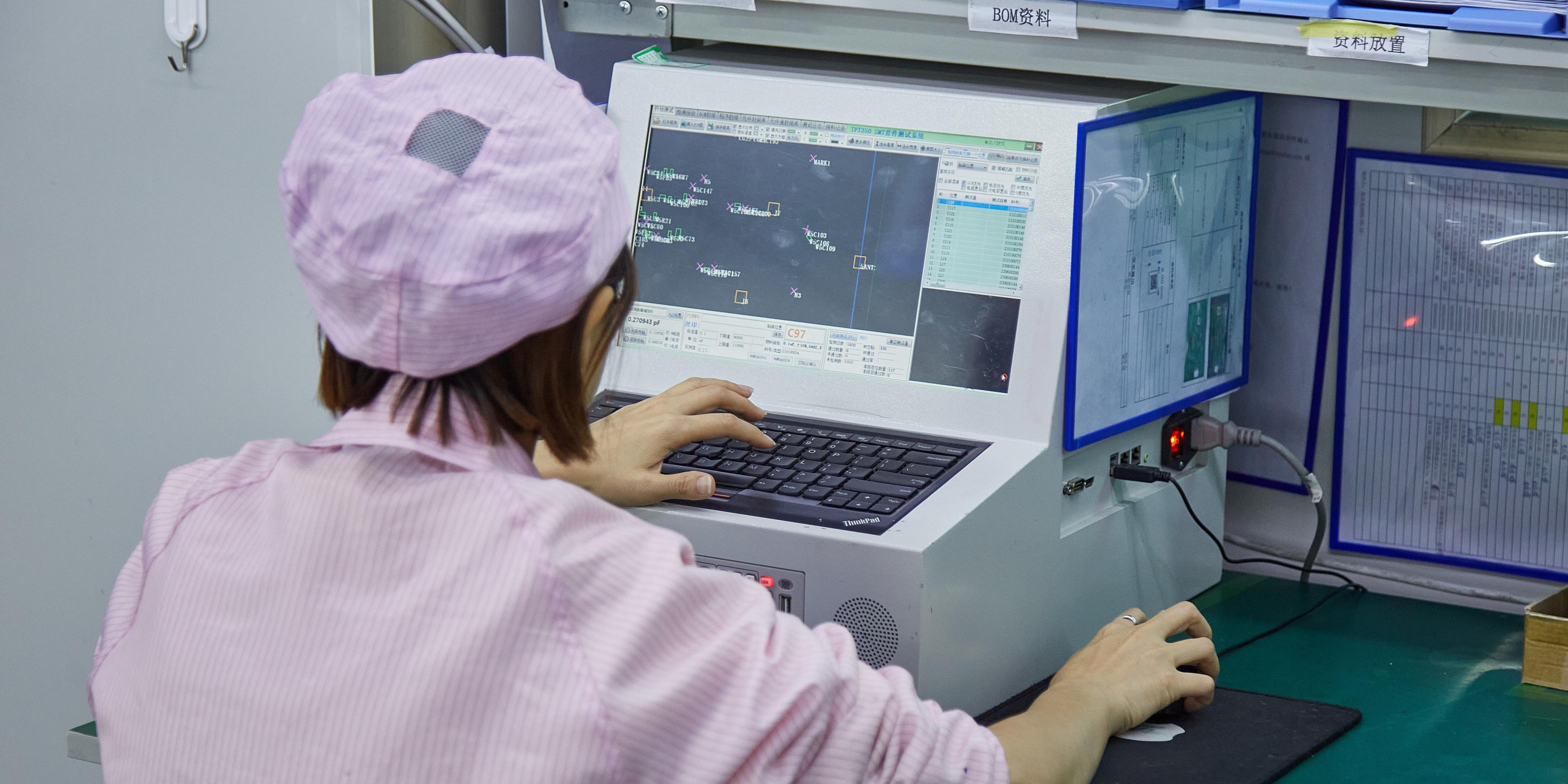
“Please build this board” can describe two very different jobs. In a build-to-print engagement, the customer has released a controlled design and asks the supplier to manufacture it. In an engineering or new product introduction (NPI) support engagement, the supplier is also being asked to identify manufacturing, assembly, sourcing, or test issues before production.
Neither model is automatically better. The right choice depends on design maturity, internal engineering resources, BOM risk, test complexity, and the outputs the buyer expects. Venture Electronics defines the requested role from the inputs, decision rights, and deliverables—not from a broad label on the RFQ.
Build-to-print starts with a released definition
Build-to-print works best when the product package is complete, internally approved, and under change control. The customer supplies the manufacturing definition: Gerber or ODB++ files, a controlled bill of materials (BOM), component placement data, assembly drawings, firmware and programming instructions where applicable, test requirements, acceptance criteria, quantity, and delivery scope.
The supplier's task is to evaluate manufacturability within the agreed scope, source or receive material according to the chosen model, assemble the board, perform agreed inspection or tests, and deliver the specified records and product. The customer retains design authority and releases any change.
Build-to-print does not mean “minimal information.” It means fewer unresolved design decisions. If versions conflict, parts are ambiguous, test limits are missing, or mechanical interfaces are undefined, the job is no longer a clean execution of a released package.
Engineering and NPI support add discovery work
Engineering support changes the question from “Can you build these files?” to “What must be resolved before these files can become a reliable build?” Depending on the project, Venture Electronics may review data completeness, design-for-manufacturing and design-for-assembly (DFM/DFA) questions, test access, BOM risk, approved alternatives, programming needs, and prototype or NPI feedback.
The outputs should be concrete: a question list, DFM/DFA observations, BOM findings, proposed alternatives with comparison information, missing test inputs, assembly clarifications, and items requiring customer confirmation. Engineering support is valuable because it makes uncertainty visible before it becomes a production interruption.
It should not be confused with unlimited product-design ownership. Unless a separate scope says otherwise, the manufacturing partner reviews and recommends while the customer approves design changes, alternative parts, firmware, test standards, and released production files.
Separate discover, recommend, approve, update, and release
Responsibility becomes clearer when the workflow is described as five actions:
- Discover: identify a file conflict, manufacturability issue, sourcing risk, test gap, or assembly question.
- Recommend: explain the issue and propose a supported option or next step.
- Approve: the authorized customer owner accepts, rejects, or modifies the proposal.
- Update: the responsible party revises the BOM, drawing, firmware instruction, test document, or other controlled file.
- Release: the customer confirms the package that may enter procurement and production.
This division prevents a helpful manufacturing suggestion from becoming an unapproved design change. It also prevents a customer approval in email from being disconnected from the production file set.
Choose the model by project condition
Ask six questions before selecting the engagement:
- Are the PCB, BOM, placement, assembly, firmware, and test files mutually consistent and released?
- Is the product at prototype, NPI, small-batch stabilization, or repeat-production stage?
- Does the customer have engineering capacity to resolve questions quickly?
- Are there obsolete, long-lead, ambiguous, or substitute-sensitive components?
- Does the board require programming, fixtures, functional test, mechanical assembly, wiring, or Box Build work?
- Will the project need controlled repeat production and traceable version records?
If the package is mature and the customer wants execution against a locked definition, build-to-print may be the efficient route. If important manufacturing decisions remain open, engineering or NPI support should be stated and scoped. In project scoping with Venture Electronics, the two modes can also be phased: an engineering-support stage closes agreed issues before build-to-print production begins against the released package.
Quote the deliverables, not only the boards
A good RFQ describes what the buyer expects to receive before, during, and after the build. That may include a file-completeness review, DFM or BOM findings, quotation assumptions, approved sourcing alternatives, prototype assemblies, first-article or inspection records, programming results, functional test records, nonconformance handling, and the final controlled data-package reference.
The request should also name approval points. Who approves a component substitute? Who answers DFM questions? Who owns firmware release? Who defines test limits? What happens if supplied files conflict? A technically strong supplier still needs an authorized customer decision path.
What Venture Electronics is actually being asked to do
Venture Electronics supports PCB Assembly and can discuss Turnkey PCBA, BOM Review, component sourcing, DFM/DFA, programming, inspection, testing, and broader EMS or Box Build activities according to the project. Those terms describe different layers of delivery; they are not a promise that every activity is included in every quote.
The fastest way to align expectations is to send the current package and state the desired role explicitly: “manufacture this released definition,” “review and help close manufacturing gaps,” or “support an NPI phase and then build the released version.” Venture Electronics can then identify the information needed, the outputs available, and the decisions that remain with the customer.
When a PCB Assembly RFQ goes wrong, is the bigger problem usually missing files—or an unstated expectation about who should solve them?